
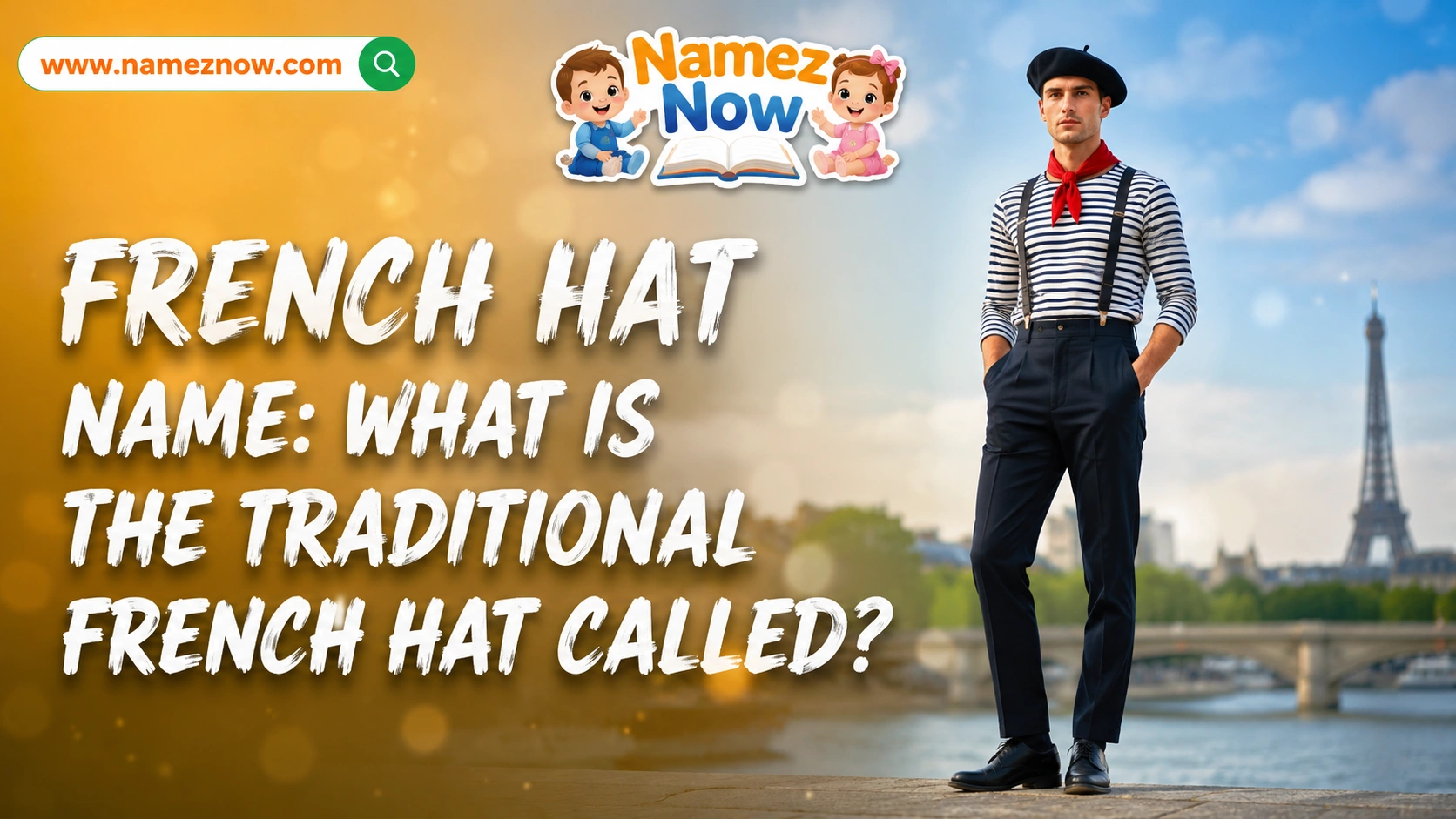
Title: French Hat Name: Beret, Pronunciation, Types, and Classic French Hats
If you are looking for the French hat name, the answer is usually beret, or béret in French. The beret is a soft, round hat traditionally associated with French and Basque culture. Its familiar shape has made it one of the most recognizable symbols of French-inspired fashion.
Find Your Perfect Name
Explore thousands of unique names with real meanings — instantly, and completely free.
However, the beret is not the only classic hat connected with France. Depending on the shape, period, and purpose, you may also be looking for a canotier, cloche, chapeau melon, or another traditional French style. Knowing the differences makes it much easier to identify the right hat.
What Is the French Hat Name?
The most common French hat name people search for is beret. In French, it is spelled béret. A beret usually has a soft, round crown with little or no traditional brim. It can be made from wool, felt, cotton, or other materials.
The familiar black beret has become strongly associated with France through fashion, art, photography, films, and popular culture. Nevertheless, the beret has a broader European and regional history, so it would be inaccurate to describe it as a hat worn exclusively by French people.
Is Beret the Same as Béret?
Yes. Beret and béret refer to the same type of hat. “Béret” is the French spelling, while “beret” is the common English spelling.
The accent over the first “e” is part of the French spelling. If you are writing an English fashion article, “beret” is perfectly normal. If you are discussing the French language itself, “béret” is the more accurate form.
What Does a Beret Look Like?
A traditional beret has a soft, circular crown that sits close to the head. Unlike a fedora or sun hat, it generally does not have a large, rigid brim.
Many berets can be shaped by the wearer. Someone may pull the crown forward, flatten it slightly, or tilt the hat toward one side. This flexibility gives the beret its characteristic relaxed appearance.
How Do You Pronounce Beret?
The pronunciation of beret can be confusing for English speakers because its French pronunciation does not sound exactly like an English spelling might suggest.
In French, béret is pronounced approximately like “beh-reh”, with the final syllable clearly pronounced. English speakers may use a slightly different pronunciation depending on their accent.
French Béret Pronunciation
A useful approximation for English speakers is:
béret → beh-reh
The first syllable resembles the vowel sound in “bet,” although French pronunciation is not identical to English pronunciation. The second syllable is also pronounced rather than being silent.
If you are learning French, listening to a native speaker is more reliable than relying entirely on an English phonetic spelling.
Beret Pronunciation in English
In everyday English, “beret” is commonly pronounced in a way that resembles the French pronunciation, although regional accents can produce small differences.
If you say “beret” clearly while discussing a French hat, most English speakers will immediately understand what you mean.
What Is the Most Popular French Hat?
The beret is arguably the most recognizable French-associated hat internationally. Its strong visual connection with France appears in illustrations, costumes, advertisements, travel imagery, and fashion.
That does not mean it is the most commonly worn hat by French people in everyday life. The distinction is important. A cultural symbol can be famous without being an everyday clothing choice.
Why Is the Beret So Famous?
The beret became strongly associated with France through several overlapping traditions. Basque regional clothing, military uniforms, artists, workers, and later fashion all contributed to its identity.
Popular media simplified these different associations into a recognizable image. Consequently, a black beret can instantly suggest “French” even when the surrounding clothing is completely modern.
Is the Beret an Everyday French Hat?
Not necessarily. Modern French people wear a wide range of hats and headwear, and many do not wear hats at all.
The idea that every French person wears a beret is mainly a stereotype created and reinforced by cultural imagery. The beret remains a legitimate fashion accessory, but it should not be treated as a universal part of modern French clothing.
What Is a Beret?
A beret is a soft, usually round hat with a relatively flat profile and little or no brim. Traditional examples are often made from wool or felt, although modern versions use many different materials.
The design is practical as well as visually distinctive. Because the material is flexible, the wearer can adjust the shape and position of the crown.
Traditional Beret Features
A traditional beret commonly includes:
- A circular or rounded crown
- Soft, flexible material
- A narrow headband or inner fitting
- Little or no projecting brim
- A relatively flat silhouette
- A shape that can be tilted or adjusted
Not every modern fashion beret contains all these features. Designers frequently modify the proportions, fabrics, colors, and decorations.
Why Do People Wear Berets?
People wear berets for different reasons. Some choose them for warmth, while others like their shape and versatility. Traditional versions can have regional or historical significance, while contemporary versions are primarily fashion accessories.
A beret can also provide a quick way to create a vintage, artistic, military-inspired, or French-inspired appearance without changing an entire outfit.
French Hat Name and Its Cultural Connection
The connection between the beret and France is partly based on regional history and partly on popular culture. The Basque region has a particularly important place in the history of traditional beret styles.
The region extends across parts of France and Spain, which is why the history of the beret cannot be reduced to a purely French origin story.
The Basque Connection
The expression béret basque refers to a Basque-style beret. Basque communities developed and wore distinctive versions of this soft round headwear, and the style eventually became widely recognized beyond the region.
This history explains why the terms “French beret” and “Basque beret” can sometimes overlap, even though they are not perfectly interchangeable.
The Artist and Paris Connection
The beret also became associated with the romantic image of artists in Paris. Paintings, posters, postcards, films, and illustrations frequently portrayed artists wearing berets.
This image remains powerful today. A character wearing a beret in a Parisian setting can immediately communicate an artistic or French-inspired theme.
However, this is a cultural stereotype rather than a rule about what French artists actually wear.
French Hat Name for Women
When people search for a French hat name women, they may be referring to the beret because it has long appeared in women’s fashion.
Modern women’s berets come in many materials and shapes. Some are small and structured, while others are oversized and soft. Decorative versions may include ribbons, embroidery, pearls, buttons, or other details.
Women’s Berets in Modern Fashion
A women’s beret can work with casual, vintage, professional, or winter outfits. The overall effect depends more on the styling than on the hat itself.
For example, a wool beret with a long coat can create a classic cold-weather look. A lighter beret with jeans and a sweater can produce a relaxed appearance.
The Cloche as a Classic Women’s Hat
The cloche is another important French-associated women’s hat, especially when discussing 1920s fashion.
Unlike the soft, relatively flat beret, a cloche usually has a deeper, bell-shaped crown that fits closely around the head. Its brim can frame the face and create a distinctly vintage silhouette.
Therefore, if someone shows you a close-fitting 1920s women’s hat, “cloche” may be more accurate than “beret.”
Types of French Hats
There is no single category called “French hats” with one fixed list. France has experienced many fashion periods, and different regions and social groups have used different headwear.
The following table highlights several styles that people commonly encounter when researching French fashion.
| Hat | Main features | Historical or fashion association |
|---|---|---|
| Beret | Soft, round crown with little or no brim | Basque traditions, French imagery, artists, military |
| Canotier | Flat crown and defined brim | Boating, summer fashion, late 19th and early 20th centuries |
| Cloche | Deep, bell-shaped crown | 1920s women’s fashion |
| Chapeau melon | Rounded crown with narrow brim | European fashion and formal wear |
| Chapeau de paille | Straw construction in various shapes | Summer and countryside fashion |
| Fedora | Structured crown and brim | International modern and classic fashion |
The Canotier
The canotier is a firm straw hat with a relatively flat crown and defined brim. It is also known in English as a boater hat.
Its appearance became associated with boating and leisure and later appeared in broader fashion. Because it has a strong connection with French visual culture, people sometimes describe it generally as a French hat.
However, it is structurally very different from a beret.
The Cloche
The cloche became particularly recognizable during the 1920s. Its name comes from the French word for “bell,” reflecting its shape.
A cloche normally sits closer to the head than a beret and often extends downward around the face. It is therefore easy to distinguish when you focus on the silhouette.
The Chapeau Melon
The chapeau melon is the French term for a bowler hat. It has a rounded, relatively firm crown and a narrow brim.
Although the bowler is not uniquely French, its French name and appearance in European fashion make it relevant when discussing classic French headwear.
French Beret vs. Other Classic Hats
The easiest way to identify a hat is to examine its construction rather than relying on the country associated with the photograph.
A beret has a soft crown and almost no brim. A canotier has a rigid straw construction and a clearly visible brim. A cloche has a deep crown that surrounds the head more closely.
| Feature | Beret | Canotier | Cloche |
|---|---|---|---|
| Crown | Soft and rounded | Firm and flat | Deep and bell-shaped |
| Brim | Minimal or absent | Clearly defined | Usually narrow or integrated |
| Common material | Wool or felt | Straw | Fabric, felt, and other materials |
| Typical look | Relaxed and flexible | Structured and summery | Vintage and close-fitting |
| Common association | French/Basque imagery | Boating and summer fashion | 1920s fashion |
How to Identify a Beret From a Picture
Look at the top of the hat first. If it appears soft and flexible, you may be looking at a beret.
Then examine the edges. If there is no substantial brim extending away from the head, that supports the identification.
Finally, look at the way the hat sits. A beret can usually be pushed or tilted to create an asymmetrical shape.
French Beret Fashion and Styling
The beret remains useful in modern fashion because it can complement both casual and more polished clothing.
A neutral-colored beret can act as a subtle accessory, while a bright version can become the focal point of an outfit.
Wearing a Beret With a Coat
A beret paired with a wool coat and scarf creates a familiar cold-weather combination. The hat can be tilted slightly rather than positioned perfectly straight.
Neutral combinations tend to create a restrained appearance. A contrasting beret can make the outfit more expressive without requiring additional accessories.
Wearing a Beret With Casual Clothes
You do not need a vintage outfit to wear a beret. Jeans, a sweater, simple shoes, and a beret can create a contemporary French-inspired look.
The most natural results usually come from treating the beret as one accessory rather than building the entire outfit around French stereotypes.
Berets in Social Media and Photography
Berets can be particularly effective in photographs because their silhouette is easy to recognize. A creator might use one for a Paris-inspired Instagram shoot, a themed Snapchat story, a fashion post, or a travel photograph.
The visual message depends heavily on the background and other clothing. A beret in front of the Eiffel Tower communicates something different from the same beret worn with ordinary streetwear.
French Hat Name Pronunciation and Language
If you are writing or speaking about this subject, there are several useful terms to know.
| Term | Language | Meaning |
|---|---|---|
| Beret | English | The common English name |
| Béret | French | French spelling |
| Béret basque | French | Basque-style beret |
| Chapeau | French | General word for hat |
| Canotier | French | Boater-style hat |
| Cloche | French | Bell-shaped hat |
The general French word chapeau simply means “hat.” It does not specifically mean beret.
What Does Chapeau Mean?
Chapeau is the broad French word for a hat. Therefore, saying “chapeau” does not automatically identify a beret.
If you want to specify the famous soft round hat, béret is the more precise French term.
This distinction is helpful for language learners because English speakers sometimes assume that a French cultural item must have one special French word. In reality, French uses different terms for different types of headwear.
French Hat Name Crossword Clue
If you encountered French hat name as a crossword clue, the expected answer may be beret.
The exact answer always depends on the number of letters and the crossing letters. “Beret” is a particularly likely answer because it is short, widely recognized, and strongly associated with France.
Why Beret Appears in Word Puzzles
“Beret” is useful for crossword constructors because it has five letters and is recognizable as a type of hat.
If the clue specifies a different number of letters, however, you should not automatically use beret. A crossword can refer to another hat or use a broader French term.
Why the Beret Became a French Symbol
The beret’s symbolic power comes from repetition. Regional clothing, military use, artistic imagery, fashion photography, and entertainment have all contributed to the public image.
Over time, these separate associations became compressed into one familiar symbol. Today, a beret can communicate “French-inspired” without providing any information about the wearer’s actual nationality.
Symbol vs. Everyday Clothing
This distinction is useful when discussing culture. A symbol represents an idea, while everyday clothing reflects what people actually choose to wear.
The beret can symbolize France in an illustration even though most people in France may never wear one. Both facts can be true at the same time.
Why Black Berets Are So Recognizable
Black creates a simple, high-contrast silhouette, which makes the beret easy to recognize in drawings and photographs.
That is one reason black berets frequently appear in French-themed graphics and costumes. Other colors are also perfectly legitimate, especially in contemporary fashion.
How to Use the French Hat Name When Identifying a Style
When someone searches for a French hat name, they may already have a particular hat in mind but not know its exact style. The easiest approach is to describe what you can actually see rather than relying only on the French connection. Look at the crown, brim, material, and overall shape. A soft, round hat with almost no brim usually points toward a beret, while a structured straw hat may indicate a canotier.
This approach is especially useful when shopping online or identifying a hat from an old photograph. Product descriptions sometimes use terms such as “French-inspired,” “Parisian,” or “classic French hat” for several different designs. Knowing the physical characteristics behind each French hat name helps you avoid confusing a fashionable interpretation with a historically specific style.
French Hat Name Clues From Shape and Material
The shape provides one of the strongest clues when identifying a French hat name. A beret normally has a flexible crown that can be tilted or reshaped, whereas a canotier has a firm crown and a visible brim. A cloche generally sits closer around the head and creates a deeper frame around the face.
Material can provide another useful clue. Wool and felt are commonly associated with berets, while straw is strongly associated with summer hats such as the canotier. These details do not always provide a definitive answer, because modern designers frequently mix traditional shapes with contemporary fabrics.
French Hat Name Choices for Different Occasions
The appropriate French hat name can also depend on the occasion. Someone looking for a casual winter accessory may be interested in a wool beret, while someone creating a vintage 1920s outfit may need a cloche. For a summer event, a structured straw canotier may make more sense than a warm wool beret.
This distinction is useful when searching for clothing online. Instead of searching only for “French hat,” describe the style you need, such as “women’s wool beret,” “1920s cloche hat,” or “straw canotier.” More specific wording usually produces more relevant results.
French Hat Name Ideas for Modern Fashion and Costumes
The phrase French hat name can refer to more than historical terminology. Fashion retailers, costume designers, photographers, and content creators often use French-inspired hat styles to establish a particular mood. A beret can suggest an artistic or Parisian theme, while a vintage cloche can immediately create a 1920s atmosphere.
For everyday fashion, however, it is better to treat these hats as accessories rather than complete cultural costumes. Pairing a beret with ordinary contemporary clothing can create a subtle French-inspired look. In contrast, combining several stereotypical French symbols at once may make an outfit appear theatrical rather than naturally styled.
French Hat Name Options for Women’s Outfits
A French hat name can help shoppers find a specific accessory for a women’s outfit. A classic beret works particularly well with coats, sweaters, dresses, and casual denim. A cloche offers a more distinctly vintage appearance, especially when the outfit takes inspiration from early twentieth-century fashion.
Color also changes the impression. Black and navy can create a restrained appearance, while cream, burgundy, red, or green can make the hat more noticeable. The best choice depends on the rest of the outfit rather than on a rule that one particular color represents French fashion.
French Hat Name Choices for Themed Characters
When choosing a French hat name for a character, the hat can help communicate personality as well as location. A soft beret might suit an artist, writer, student, traveler, or creative character, while a historical cloche could work better for a period character.
For illustrations, children’s books, social media graphics, and costumes, visual recognition often matters more than historical precision. Still, using the correct term gives the character a more believable design. A character wearing a flat straw hat should not automatically be described as wearing a beret simply because the setting is Paris.
French Hat Name Trends in Everyday Searches and Online Content
Online searches for a French hat name often combine language questions with fashion searches. One person may want the French word for a hat, while another may be trying to identify an accessory seen in a photograph. Others may be looking for a crossword answer, costume idea, product description, or pronunciation guide. Understanding this range of search intent makes the terminology much easier to navigate.
Social media has also made visual fashion terminology more flexible. A creator might call a modern oversized beret a “French hat” because it creates a Paris-inspired aesthetic, even though the design differs from a traditional regional beret. For readers, the most useful distinction is between the general style being referenced and the precise historical or construction-based name.
French Hat Name Searches for Social Media and Fashion
A French hat name may appear in Instagram captions, Pinterest searches, TikTok fashion videos, or shopping queries. People often use phrases such as “French beret,” “Parisian hat,” or “French-inspired hat” when looking for an aesthetic rather than a historically exact item.
If you are creating content, using both the familiar and precise terms can make the description clearer. For example, you could describe an item as a “classic French-inspired beret” and then explain that the French word is béret. This gives readers the recognizable English term while also providing the language detail they may have been searching for.
French Hat Name Terms for Better Online Descriptions
A clear French hat name description should tell readers what the hat actually looks like. Instead of calling every rounded hat a French beret, explain whether it has a brim, whether the crown is soft or structured, and what material it uses.
This approach also helps product descriptions sound more trustworthy. A shopper searching for a beret should quickly understand whether the item is genuinely a soft, round beret or simply a different hat marketed with French-inspired language. Precise terminology makes the content more useful without making it sound overly technical.
French Hat Name FAQs
What Is the Most Popular French Hat?
The beret is probably the most internationally recognizable French-associated hat. Its soft, round shape and long cultural associations have made it a familiar symbol of French-inspired fashion. However, this does not mean it is the most commonly worn hat in France today.
Is It Beret or Beret?
The English word is beret, while the French spelling is béret. They refer to the same type of soft, round hat. The accent in “béret” belongs to the French spelling.
What Is Beret?
A beret is a soft, generally round hat with a flat or gently rounded crown and little or no brim. Traditional versions are often made from wool or felt. Modern berets can use many materials and may have different proportions or decorative details.
What Are Some Classic French Hats?
Classic French-associated hats include the beret, canotier, cloche, and chapeau melon. Each has a different shape and historical context. The beret is soft and round, the canotier is usually a structured straw hat, and the cloche has a distinctive bell-shaped silhouette.
What Is the French Word for Hat?
The general French word for “hat” is chapeau. Specific hats have their own names, such as béret for a beret and canotier for a boater-style hat.
What Is the French Hat Worn by Artists?
The hat most commonly associated with the stereotypical French artist is the beret. This association comes largely from popular cultural imagery of artists in Paris and should not be interpreted as a universal description of French artists.
What Is a French Beret Called in French?
A French beret is called a béret. A traditional Basque-style version may be described as a béret basque.
What Is the Difference Between a French Beret and a Basque Beret?
A French beret is a broad description that can refer to berets associated with French fashion or culture. A Basque beret specifically points toward the regional tradition of the Basque Country. The two terms can overlap, but they are not always identical in meaning.
Are Berets Only for Women?
No. Berets have been worn by men and women in different historical and modern contexts. Military, regional, artistic, and fashion versions can all differ considerably in appearance and purpose.
What Hat Did Women Wear in 1920s France?
The cloche is strongly associated with women’s fashion during the 1920s. Its close-fitting, bell-like shape makes it quite different from the softer and flatter beret.
What Is a French Straw Hat Called?
A canotier is one well-known French-associated straw hat. It typically has a firm, flat crown and a clearly defined brim. The term should not be used for every straw hat because straw hats come in many different shapes.
Can You Wear a Beret Casually?
Yes. A beret can work with jeans, sweaters, coats, dresses, or other everyday clothing. Modern styling does not require a traditional French costume.
Why Does a Beret Represent France?
The beret became connected with France through regional traditions, historical clothing, military associations, artists, fashion, and popular media. These influences created a powerful cultural image that remains recognizable today.
Final Thoughts on the French Hat Name
The simplest answer to French hat name is beret, with béret being the French spelling. It is a soft, round hat that has become strongly associated with French and Basque culture.
However, the story becomes more interesting when you look beyond the familiar black beret. The canotier, cloche, chapeau melon, and other styles show that French hat traditions include many different shapes and periods. Identifying the crown, brim, material, and historical context is the best way to determine which hat you are actually seeing.
If you are searching for the word for a French-inspired artist’s hat, a costume accessory, or the classic soft round style, beret is usually the term you need. If the hat has a firm brim or a distinctive historical shape, another French hat name may be more accurate.

Anas Abbas
Passionate about researching and creating meaningful, unique, and creative names for readers around the world.
View Full Profile →