
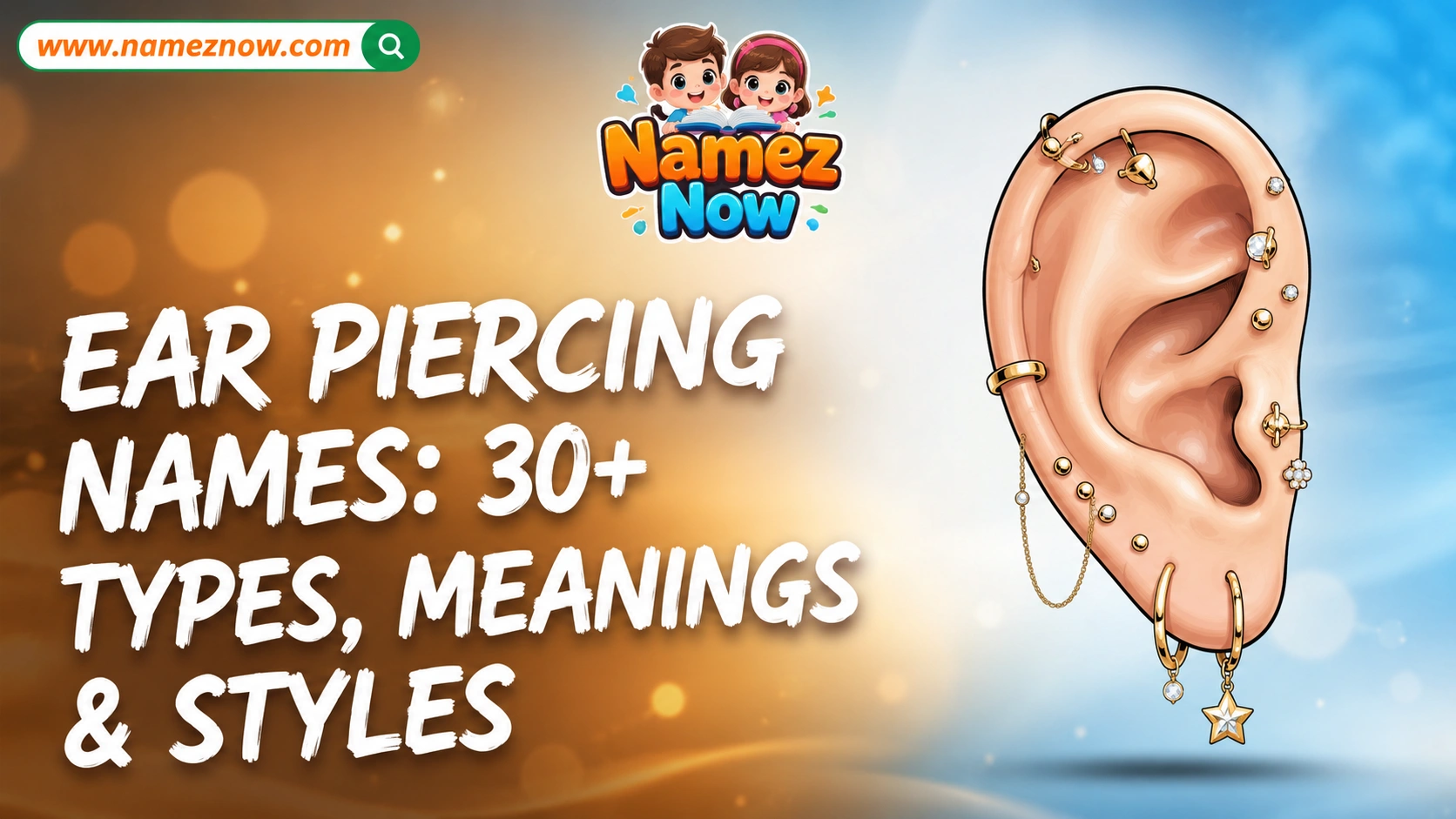
Choosing a new piercing becomes easier when you understand the terminology. ear piercing names describe different placements, jewelry styles, and combinations across the ear. Common choices include lobe, upper lobe, helix, forward helix, tragus, conch, daith, rook, snug, and industrial piercings. Each placement creates a different appearance and requires different jewelry. Therefore, knowing the correct name helps you communicate clearly with a professional piercer and choose a suitable style.
The ear offers many placement options, from simple single-lobe jewelry to elaborate curated arrangements. Some placements sit through cartilage, while others use the softer lower lobe. Cartilage piercings usually need more healing time and careful aftercare. However, healing experiences can vary between individuals. Your anatomy also affects which placements will work comfortably.
Find Your Perfect Name
Explore thousands of unique names with real meanings — instantly, and completely free.
This guide explains ear piercing names in simple language. You will learn where each piercing sits, what jewelry commonly suits it, and how different placements compare. You will also discover popular combinations, terminology, styling ideas, and answers to common questions.
Popular Ear Piercing Names For Beginners
Beginners often start with familiar placements because they provide straightforward styling options. ear piercing names such as lobe, upper lobe, and helix appear frequently in piercing studios. These placements can also work well with different jewelry sizes and materials.
Your first piercing should match your lifestyle, comfort preferences, and desired appearance. A professional piercer can examine your ear anatomy before recommending a placement. That assessment matters because cartilage structures differ from person to person.
Lobe Piercing
The standard lobe piercing passes through the soft tissue at the bottom of the ear. It remains one of the most recognizable ear piercing names worldwide. Many people choose it as their first piercing because the location offers extensive jewelry choices.
Studs, small hoops, gemstones, and lightweight decorative earrings can work well in lobe piercings. Multiple lobe piercings can also create a stacked appearance. However, spacing requires careful planning. A professional should consider your existing holes and future jewelry preferences.
Upper Lobe Piercing
An upper lobe piercing sits above the traditional lobe placement. It remains below most cartilage structures, although exact anatomy varies. Among ear piercing names, upper lobe describes placement rather than a particular jewelry style.
This piercing works especially well alongside a standard lobe piercing. Small studs often create a neat vertical arrangement. You can also combine different metals or gemstone sizes for contrast. Before piercing, ask the professional to mark the intended location.
Second And Third Lobe Piercings
Second and third lobe piercings create additional holes above the first lobe piercing. These placements allow people to build a layered jewelry arrangement without immediately entering cartilage territory. They appear frequently in modern ear-styling guides.
Spacing becomes increasingly important with multiple holes. Jewelry should not overlap or press against neighboring pieces. A piercer can help create balanced spacing based on your ear shape. Therefore, planning the complete arrangement before piercing can produce a cleaner result.
Cartilage Ear Piercing Names Explained
Cartilage placements account for many of the most recognizable ear piercing names. These piercings pass through firmer tissue than standard lobe piercings. Consequently, they generally require more patience during healing.
Cartilage can also experience pressure from headphones, helmets, sleeping positions, and hair. Good aftercare therefore involves protecting the area from unnecessary friction. A professional piercer should provide individualized instructions.
Helix Piercing
A helix piercing sits along the outer upper rim of the ear. It ranks among the most popular ear piercing names because its placement offers a versatile appearance. You can wear a small stud, flat-back jewelry, or a suitable hoop after healing.
People can choose different helix positions depending on their anatomy and styling goals. A single helix creates a subtle accent, while multiple helix piercings create a layered look. Avoid changing jewelry prematurely because cartilage requires substantial healing time.
Forward Helix Piercing
A forward helix piercing sits near the front portion of the upper ear cartilage. It appears close to the point where the ear meets the side of the head. This placement can create a delicate appearance with tiny jewelry.
Forward helix anatomy varies considerably. Some ears provide enough space for multiple placements, while others do not. A professional should evaluate the ridge before marking the piercing. Small studs generally suit this area because larger jewelry may interfere with nearby structures.
Flat Piercing
A flat piercing sits through the broad, relatively flat cartilage area inside the upper ear. Unlike a traditional helix, it does not pass through the outer rim. Its location provides a useful canvas for decorative studs.
Among ear piercing names, “flat” refers primarily to anatomical placement. Jewelry can therefore vary considerably. Small gemstones, opals, clusters, and minimalist studs can all complement the area. The final position should account for your ear’s natural shape and existing piercings.
Ear Piercing Names For Inner Cartilage Placements
Inner cartilage piercings create some of the most distinctive ear piercing names in piercing terminology. These placements include the conch, daith, and rook. Each occupies a different fold or section of the ear.
Because these areas contain cartilage, they can react to pressure and irritation. Sleeping directly on a fresh piercing may cause unnecessary discomfort. Therefore, careful positioning and appropriate jewelry remain important.
Conch Piercing
A conch piercing sits through the central cartilage area of the ear. The name comes from the ear’s resemblance to a conch shell. It can use either a stud or, after suitable healing, an appropriately fitted hoop.
The inner conch creates a noticeable focal point without requiring an elaborate arrangement. Many people pair it with lobe and helix jewelry. However, jewelry size must match the anatomy and placement. A professional can determine appropriate dimensions during the appointment.
Daith Piercing
A daith piercing passes through the inner cartilage fold above the ear canal. Its curved location gives it a distinctive appearance. Small captive rings and curved jewelry are commonly associated with this placement.
The daith also appears frequently in online discussions about headaches and migraine relief. However, evidence does not establish daith piercing as a reliable medical treatment. Anyone seeking medical relief should consult an appropriate healthcare professional rather than relying on a piercing.
Rook Piercing
A rook piercing passes through the upper inner cartilage ridge. It creates a tucked-away appearance because the jewelry sits inside the ear’s upper folds. Small curved jewelry commonly complements this placement.
Not every ear has suitable anatomy for a rook piercing. The ridge must have enough tissue for safe placement. Therefore, an experienced piercer should assess the ear before recommending it. This placement can also require patience during healing because cartilage heals slowly.
Outer Ear Piercing Names And Their Placements
Outer-ear placements offer numerous styling possibilities. Understanding ear piercing names helps distinguish similar-looking locations. Helix, forward helix, and snug piercings can appear close together but occupy different anatomical areas.
Placement accuracy matters because small changes can alter jewelry positioning. A professional should mark the area while considering both anatomy and future styling. This approach helps prevent crowded jewelry arrangements.
Snug Piercing
A snug piercing passes through the inner cartilage ridge that runs roughly parallel to the outer ear rim. It creates a distinctive horizontal appearance. The placement can look striking with carefully selected jewelry.
Snug anatomy varies significantly. Some ears lack sufficient tissue for this piercing. Because of that variation, a professional assessment becomes particularly important. Jewelry should fit comfortably without creating excessive pressure on the surrounding cartilage.
Anti-Tragus Piercing
An anti-tragus piercing sits through the cartilage opposite the tragus, above the lobe. It creates a compact accent near the lower outer ear. This location can work well for people seeking something less conventional.
The area experiences frequent contact from earbuds, headphones, and hands. Consequently, daily habits can influence comfort during healing. A piercer can suggest jewelry that suits your anatomy and minimizes unnecessary movement.
Industrial Piercing
An industrial piercing usually connects two cartilage piercings with one straight barbell. It commonly runs diagonally across the upper ear. Among ear piercing names, industrial remains one of the easiest to recognize because of its long jewelry.
Traditional industrial placement requires compatible anatomy at both piercing points. Not every ear can safely accommodate the standard arrangement. Some studios may recommend alternative configurations when anatomy does not support a traditional bar. Never force an industrial design onto unsuitable anatomy.
Ear Piercing Names And Jewelry Styles
Placement and jewelry describe different aspects of piercing terminology. ear piercing names usually identify where the piercing sits, while jewelry terms describe what you wear through it.
Understanding both categories helps you communicate more effectively. For example, you might request a conch piercing with a flat-back stud. The first term describes placement, while the second describes jewelry.
Studs And Flat-Back Jewelry
Stud jewelry provides a clean and versatile appearance. Flat-back labret jewelry is particularly common for many cartilage placements. Its flat rear section can reduce snagging compared with some traditional earring backs.
The jewelry must still have appropriate length and material. Fresh piercings need room for normal swelling. However, excessively long jewelry can move unnecessarily and cause irritation. A qualified piercer can select suitable initial jewelry.
Hoops And Rings
Hoops can create a softer and more continuous appearance. They suit some healed placements particularly well. However, not every fresh piercing should begin with a hoop.
Movement, pressure, and jewelry diameter can affect irritation. Therefore, the piercer should determine whether a ring suits the specific placement. Once healing allows jewelry changes, the correct diameter can create a comfortable fit.
Barbells And Curved Jewelry
Barbells use decorative ends connected by a straight shaft. Industrial piercings commonly use straight barbells, while other placements may use curved jewelry.
Curved barbells can complement anatomical folds such as the rook. However, jewelry should match the piercing’s actual angle. Using unsuitable jewelry can create pressure and migration concerns. Professional fitting therefore remains essential.
Ear Piercing Names For Different Aesthetic Styles
Different placements support different visual goals. Some people prefer minimal jewelry, while others want a dramatic curated ear. ear piercing names make it easier to plan these combinations.
A balanced arrangement usually considers spacing, symmetry, jewelry size, and metal choice. You do not need identical jewelry on both ears. Many modern styles intentionally create complementary but different arrangements.
Minimalist Ear Styling
Minimalist styling usually uses small studs, delicate hoops, and limited decoration. Lobe, upper lobe, helix, and conch placements can support this aesthetic.
A minimalist arrangement does not require many piercings. Instead, thoughtful spacing creates visual balance. You can also use similar metals throughout the ear. Small gemstones can add interest without making the arrangement appear crowded.
Curated Ear Styling
A curated ear combines multiple piercings into a planned jewelry composition. The design may include lobe, helix, conch, tragus, and other placements.
The goal involves creating visual harmony rather than simply collecting piercings. Jewelry size should generally vary across the ear. A professional piercer can help plan future placements around existing jewelry.
Statement Ear Styling
Statement styling uses noticeable jewelry or prominent placements. Industrial piercings can create a strong focal point, while larger decorative pieces can emphasize healed cartilage piercings.
However, statement styling still requires anatomical planning. Jewelry should never create excessive pressure. The strongest designs usually balance one prominent feature with simpler surrounding pieces.
Ear Piercing Names For Boys And Men
Piercing terminology does not depend on gender. Any person can choose a placement based on anatomy, lifestyle, and personal style. Therefore, ear piercing names remain the same regardless of who wears them.
Men and boys can choose single-lobe piercings, multiple lobes, helix placements, or other suitable options. Jewelry can range from subtle studs to bold hoops. Personal preference should guide the final design.
Popular Choices For Men
Single-lobe piercings remain a simple starting point. Small black, silver, gold, or gemstone studs can create different appearances. Multiple lobe piercings provide additional styling flexibility.
Helix and conch placements can also create a more distinctive look. However, cartilage requires additional care. Lifestyle factors should influence the decision, especially for people who regularly wear helmets or contact sports equipment.
Professional And Everyday Styling
People with professional workplaces often prefer discreet jewelry. Small flat-back studs can provide a subtle appearance without attracting excessive attention.
You can also choose jewelry that matches your existing accessories. Consistent metal tones create a coordinated appearance. However, mixing metals can also work when the arrangement uses intentional contrast.
Ear Piercing Names For Girls And Women
Women and girls can use the same placement terminology as anyone else. The main difference usually involves styling preferences rather than anatomy. ear piercing names therefore describe location rather than gender.
Many people create layered arrangements using multiple lobe placements and cartilage accents. Tiny gemstones, hoops, pearls, and decorative clusters can create different aesthetics.
Elegant Piercing Combinations
A standard lobe paired with an upper lobe and small helix can create an elegant arrangement. Each piece can remain subtle while contributing to the overall design.
Conch jewelry can provide a central focal point. Meanwhile, tiny helix studs can add height. The arrangement should maintain sufficient space between jewelry pieces.
Cute And Trendy Arrangements
Trendy arrangements often combine small colorful stones, charms, and mixed jewelry shapes. A second lobe can support a small charm, while the upper ear can feature tiny studs.
However, trends should never override anatomy. A design that works beautifully on one ear may not suit another. Professional assessment remains the safest way to plan new cartilage placements.
How Ear Piercing Names Help You Plan A Curated Ear
A curated ear begins with a plan rather than random placement. Understanding ear piercing names helps you communicate your desired arrangement accurately.
Start by identifying your existing piercings. Then consider the empty areas around them. Your piercer can evaluate available cartilage and suggest compatible placements.
Create A Placement Map
You can sketch your desired arrangement before visiting a studio. Mark existing holes and identify potential future locations. This approach helps you visualize spacing.
However, treat your sketch as inspiration rather than a final medical or anatomical plan. The piercer should make final placement decisions after examining your ear. Anatomy can require changes to the original design.
Balance Jewelry Sizes
A curated ear usually benefits from varied jewelry dimensions. Large pieces can create focal points, while smaller pieces provide visual breathing room.
You can also vary shapes. For example, a stud can complement a hoop without competing with it. Jewelry color can create another layer of coordination.
Ear Piercing Names And Healing Considerations
Healing differs between individuals and piercing locations. Lobe piercings generally heal more easily than cartilage piercings, but individual experiences vary. ear piercing names help you identify the placement, but they cannot predict your exact healing time.
Avoid treating a fresh piercing like a healed accessory. Touching, twisting, or frequently changing jewelry can irritate healing tissue. Follow the aftercare guidance provided by your professional piercer.
Lobe Healing
Lobes contain softer tissue and often heal more straightforwardly than cartilage. Nevertheless, a fresh lobe piercing still requires proper hygiene and protection.
Avoid unnecessary handling during healing. Keep hair products, cosmetics, and dirty hands away from the piercing. Follow your piercer’s cleaning instructions rather than repeatedly applying harsh products.
Cartilage Healing
Cartilage piercings commonly require more patience. Pressure from sleeping, headphones, helmets, and hair can cause irritation.
Do not assume that a piercing has completely healed simply because it looks normal externally. Internal tissue may still require recovery. Ask your piercer before changing initial jewelry.
Comparing Common Ear Piercing Names At A Glance
The following table summarizes major placements. ear piercing names can vary slightly between studios, so anatomical descriptions provide the clearest reference.
| Piercing Name | General Location | Common Jewelry | Main Styling Character |
|---|---|---|---|
| Lobe | Lower soft ear | Stud or hoop | Classic |
| Upper Lobe | Above standard lobe | Stud or small hoop | Layered |
| Helix | Outer upper rim | Stud or hoop | Modern |
| Forward Helix | Front upper rim | Small stud | Delicate |
| Flat | Upper inner surface | Flat-back stud | Decorative |
| Conch | Central ear cartilage | Stud or hoop | Focal |
| Daith | Inner cartilage fold | Ring | Distinctive |
| Rook | Upper inner ridge | Curved jewelry | Subtle |
| Snug | Inner cartilage ridge | Curved jewelry | Unusual |
| Tragus | Small cartilage flap | Stud | Minimal |
| Anti-Tragus | Cartilage above lobe | Stud or curved jewelry | Alternative |
| Industrial | Two upper cartilage points | Straight barbell | Bold |
Which Placements Look Most Versatile?
Lobe and upper-lobe placements generally offer broad jewelry flexibility. Helix and conch placements also support different jewelry styles after suitable healing.
Your anatomy still determines what works best. A professional can assess available space and recommend appropriate jewelry dimensions. Therefore, versatility depends on both placement and anatomy.
Which Placements Create A Bold Look?
Industrial piercings often create an immediately noticeable appearance. Multiple helix placements can also produce a dramatic upper-ear arrangement.
A large statement piece does not automatically make a piercing better. Good styling depends on balance, comfort, and suitable jewelry. A professional can help you create a bold design without overcrowding the ear.
Ear Piercing Names And Safety Considerations
Knowing ear piercing names should always accompany basic safety knowledge. A piercing creates an intentional opening through body tissue. Therefore, sterile technique, appropriate jewelry, and professional experience matter.
Choose a reputable studio that follows proper hygiene practices. The piercer should use sterile, single-use needles for new piercings. They should also explain aftercare clearly.
Choosing A Professional Piercer
Look for a piercer who examines your anatomy before piercing. They should discuss placement, jewelry, healing, and aftercare.
Avoid choosing a studio solely because it offers the lowest price. Quality equipment, sterile technique, appropriate jewelry, and professional experience matter more. Ask questions before agreeing to the procedure.
Recognizing Potential Problems
Fresh piercings can experience normal tenderness and mild swelling. However, worsening symptoms deserve professional attention.
Seek appropriate medical advice if you develop severe pain, spreading redness, significant swelling, fever, or other concerning symptoms. Do not rely on internet advice to diagnose an infection.
Ear Piercing Names And Common Jewelry Materials
Jewelry material can influence comfort and suitability. ear piercing names identify placement, while jewelry specifications determine what sits inside the piercing.
Professional piercers commonly discuss materials such as implant-grade titanium and suitable gold alloys. Material selection should consider quality, construction, and individual sensitivity.
Titanium Jewelry
Implant-grade titanium is widely used for body jewelry because it provides a lightweight option. It can suit people who need carefully selected materials.
However, not every product labeled “titanium” has identical quality. Ask the piercer about the jewelry’s specifications and certification. Appropriate threading and polished surfaces also matter.
Gold Jewelry
High-quality solid gold jewelry can provide an elegant appearance. However, purity and alloy composition matter. Gold-plated or gold-filled products are not automatically equivalent to suitable solid gold body jewelry.
Ask a professional about jewelry intended specifically for body piercing. Avoid guessing based solely on color or marketing claims.
How To Choose Between Different Ear Piercing Names
Choosing between placements becomes easier when you evaluate your goals. ear piercing names provide useful terminology, but the best choice depends on anatomy, lifestyle, and personal preference.
Consider how you sleep, work, exercise, and use headphones. These habits can affect comfort during healing. Your existing piercings also influence available space.
Choose Based On Lifestyle
People who wear helmets frequently may find certain cartilage placements inconvenient during healing. Similarly, regular headphone use can affect some ear locations.
Discuss these habits with your piercer. They can help identify placements that create fewer conflicts. Practical planning can make the healing experience easier.
Choose Based On Appearance
Decide whether you prefer minimalist, elegant, edgy, or highly curated styling. Then identify placements that support that visual direction.
You do not need to choose several piercings at once. Starting with one placement allows you to understand your healing experience before adding more.
Frequently Asked Questions About Ear Piercing Names
People often search for terminology before visiting a piercing studio. The following questions address common queries about ear piercing names and placements.
What Are The Most Common Ear Piercing Names?
The most common terms include lobe, upper lobe, helix, forward helix, tragus, conch, daith, rook, and industrial. Each term describes a specific anatomical placement.
However, naming conventions can vary slightly between studios. If you feel uncertain, show your piercer a reference image and describe the desired location. A professional can confirm the correct terminology before marking the ear.
What Is The Most Popular Ear Piercing?
The standard lobe piercing remains one of the most common piercing choices. It offers extensive jewelry options and a familiar appearance.
Helix and upper-lobe piercings have also become popular for layered styling. Popularity can change with fashion trends, but anatomy should always guide placement decisions.
What Is The Most Painful Ear Piercing?
Pain varies significantly between individuals, so there is no universal ranking. Cartilage piercings can feel different from soft-tissue lobe piercings.
The procedure itself is brief, but tenderness can continue during healing. Your piercer can explain what to expect for the specific placement you choose.
Which Ear Piercing Heals Fastest?
Lobe piercings generally heal faster than cartilage placements. However, healing varies according to individual biology, jewelry, aftercare, and irritation.
Do not remove initial jewelry simply because discomfort decreases. Follow your piercer’s guidance about healing and jewelry changes.
Can I Sleep On A New Ear Piercing?
Direct pressure can irritate a fresh piercing, particularly when cartilage is involved. Therefore, avoiding pressure during healing can make the area more comfortable.
Consider changing your sleeping position or using a clean travel pillow. Your piercer can recommend practical strategies based on the placement.
Can I Get Multiple Ear Piercings At Once?
Some people can safely receive multiple piercings during one appointment. However, the appropriate number depends on placement, anatomy, health factors, and professional assessment.
More healing sites can also make aftercare more demanding. Discuss your complete plan with an experienced piercer before proceeding.
What Is A Curated Ear?
A curated ear is a deliberately planned combination of piercings and jewelry. The arrangement considers placement, spacing, jewelry size, shape, and overall visual balance.
Instead of adding random holes, you create a coordinated design. A professional piercer can help build the arrangement gradually.
What Is An Industrial Piercing?
An industrial piercing typically connects two upper-ear cartilage piercings with a straight barbell. It creates a distinctive diagonal line across the ear.
Traditional industrial placement requires suitable anatomy at both points. Some people may need alternative jewelry configurations when their anatomy does not support a standard industrial.
Are Ear Piercings Permanent?
Piercings can close or shrink when jewelry remains out, especially newer piercings. Older healed piercings may remain open for longer, but results vary.
Do not assume that removing jewelry will always leave the opening unchanged. If you want to retire a piercing, discuss the process with a professional.
What Ear Piercing Should I Get First?
A standard lobe piercing provides a straightforward starting point for many beginners. It offers numerous jewelry choices and usually creates fewer lifestyle conflicts than cartilage.
However, your first choice should reflect your anatomy and preferences. A professional consultation can help you select a suitable placement.
Final Guide To Ear Piercing Names And Styling
Learning ear piercing names gives you a practical vocabulary for planning your piercing journey. You can distinguish lobe, helix, conch, daith, rook, tragus, and industrial placements more confidently. That knowledge makes conversations with professional piercers easier and helps you understand jewelry recommendations.
The best piercing design combines personal style with practical considerations. Think about your existing jewelry, sleeping habits, headphones, workplace requirements, and future plans. Then choose placements that complement your ear rather than forcing a trend onto unsuitable anatomy.
Remember that ear piercing names describe locations, not guarantees about comfort or healing. Individual anatomy influences placement possibilities, jewelry selection, and recovery. Therefore, professional assessment remains essential, especially for cartilage piercings.
Whether you prefer one classic lobe piercing or a carefully planned curated ear, start with quality and safety. Choose a reputable professional, use appropriate jewelry, follow aftercare instructions, and allow sufficient healing time. With thoughtful planning, your chosen ear piercing names can become the foundation for a stylish and comfortable jewelry arrangement.

Umm ul Baneen
Passionate about researching and creating meaningful, unique, and creative names for readers around the world.
View Full Profile →