
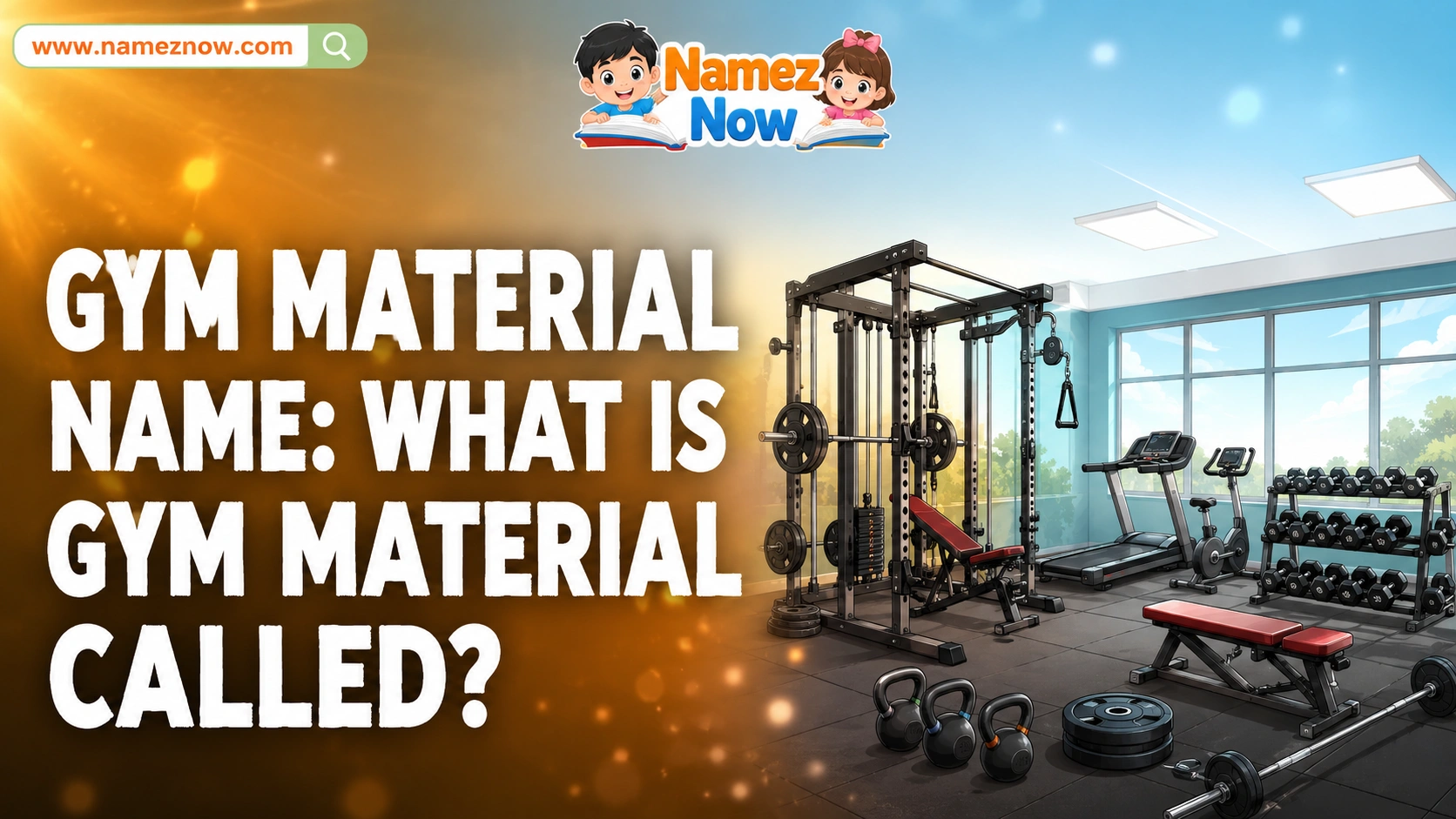
If you are searching for gym material name, you probably want the names of common gym equipment and fitness tools. The most common gym materials include treadmills, dumbbells, barbells, weight plates, benches, exercise bikes, rowing machines, cable machines, kettlebells, resistance bands, and yoga mats. Each item serves a different training purpose. Some equipment builds strength, while other tools improve cardio, balance, flexibility, or mobility. Knowing the correct names makes it easier to choose equipment for a home gym, commercial gym, school, or fitness center.
A complete gym material name list can also help students, gym beginners, trainers, bloggers, and people shopping for fitness equipment. Gym equipment comes in many sizes and designs. Some machines target specific muscles, while free weights allow more flexible movements. Therefore, understanding equipment names helps you choose the right tools for your fitness goals.
Find Your Perfect Name
Explore thousands of unique names with real meanings — instantly, and completely free.
This guide explains common gym equipment names in simple English. It covers strength equipment, cardio machines, free weights, functional training tools, accessories, home gym equipment, and professional fitness machines. You will also find a useful gym equipment names list with purposes, benefits, and examples.
Gym Material Name: Basic Gym Equipment List
Common Gym Material Names for Beginners
When beginners enter a gym, they may see dozens of unfamiliar machines and accessories. However, most gyms use a similar group of basic equipment. Learning these names creates a strong foundation.
| Gym Material Name | Main Use | Training Type |
|---|---|---|
| Treadmill | Walking and running | Cardio |
| Dumbbells | Strength exercises | Resistance |
| Barbell | Heavy lifting | Strength |
| Weight Plates | Adding resistance | Strength |
| Bench | Supporting exercises | Strength |
| Kettlebell | Full-body movements | Functional |
| Exercise Bike | Cycling workouts | Cardio |
| Rowing Machine | Rowing movement | Cardio |
| Cable Machine | Resistance exercises | Strength |
| Pull-Up Bar | Pull-ups and chin-ups | Bodyweight |
| Resistance Bands | Flexible resistance | Strength |
| Yoga Mat | Floor exercises | Mobility |
| Foam Roller | Muscle recovery | Recovery |
| Medicine Ball | Throwing and core work | Functional |
| Jump Rope | Skipping and cardio | Cardio |
This basic gym material name list covers equipment found in many fitness centers. Beginners do not need to use everything immediately. Instead, they can start with simple tools and gradually learn more equipment.
Gym Material Names for Different Training Goals
Different equipment supports different fitness goals. For example, a treadmill suits people who want cardiovascular exercise. Dumbbells work well for resistance training. A foam roller supports recovery and mobility.
Therefore, beginners should choose equipment according to their goals. Someone focused on muscle building needs different tools from someone training for endurance.
Gym Material Name: Strength Training Equipment
Gym Material Name for Weight Training
Strength equipment helps people challenge their muscles with resistance. Gyms usually offer free weights, machines, benches, racks, and cable systems.
The most common strength equipment includes:
- Dumbbells
- Barbells
- Weight plates
- Squat racks
- Power racks
- Adjustable benches
- Cable machines
- Smith machines
- Leg press machines
- Chest press machines
- Shoulder press machines
- Lat pulldown machines
These tools support exercises such as squats, presses, rows, curls, lunges, and deadlifts.
Free weights require users to control the equipment through space. Machines often guide movement through a fixed path. Both options can support effective strength training when used correctly.
Gym Material Names for Muscle Building
People who want to build muscle often use progressive resistance. They gradually increase training difficulty as their strength improves.
Dumbbells and barbells remain popular because they allow many different exercises. Weight machines can also provide targeted resistance.
For example, a leg press machine focuses heavily on the lower body. A lat pulldown machine trains pulling muscles around the back and arms. A chest press machine provides a guided pressing movement.
However, equipment alone does not build muscle. Consistent training, adequate nutrition, recovery, and proper exercise technique also matter.
Gym Material Name: Dumbbells and Free Weights
Gym Material Name for Dumbbells
Dumbbells are among the most recognizable items on any gym material name list. They consist of short handles with weights attached to both ends.
Gyms usually offer several dumbbell types. Fixed dumbbells come in predetermined weights. Adjustable dumbbells allow users to change the resistance.
Dumbbells support exercises such as:
- Biceps curls
- Shoulder presses
- Chest presses
- Lateral raises
- Goblet squats
- Lunges
- Dumbbell rows
- Romanian deadlifts
Their small size makes them particularly useful for home gyms.
Gym Material Name for Barbells
A barbell consists of a long metal bar designed to hold weight plates. Standard barbells and Olympic barbells differ in size, loading capacity, and intended use.
Common barbell exercises include squats, deadlifts, bench presses, overhead presses, and rows.
A barbell can support heavier loading than many individual dumbbells. However, beginners should learn proper technique before adding substantial weight.
A squat rack or power rack can provide support during several barbell exercises.
Gym Material Name: Weight Plates and Benches
Gym Material Name for Weight Plates
Weight plates add resistance to barbells, machines, and some specialized equipment. They come in different weights and materials.
Common types include cast iron plates, rubber-coated plates, bumper plates, and competition-style plates.
Bumper plates work particularly well for exercises where the bar may contact the floor. Olympic lifting facilities commonly use them for movements such as cleans and snatches.
Weight plates can also support plate-loaded machines. Therefore, they remain essential equipment in many strength-focused gyms.
Gym Material Name for Workout Benches
A workout bench provides support during exercises. Flat benches remain simple and versatile. Adjustable benches can change between flat, incline, and sometimes decline positions.
People use benches for:
- Bench presses
- Dumbbell presses
- Seated shoulder presses
- Step-ups
- Dumbbell rows
- Split squats
- Core exercises
An adjustable bench can provide more exercise options. Consequently, it can become one of the most useful purchases for a home gym.
Gym Material Name: Cardio Machines
Gym Material Name for Treadmills
The treadmill is one of the most popular cardio machines. It allows users to walk, jog, or run indoors.
Most modern treadmills include adjustable speed and incline settings. Some models also provide workout programs, heart-rate information, and training statistics.
Treadmills can support different fitness levels. Beginners may start with comfortable walking. Experienced runners can increase speed or incline.
However, users should begin gradually and maintain proper posture. Holding the handrails unnecessarily can change natural walking mechanics.
Gym Material Name for Exercise Bikes
Exercise bikes provide indoor cycling workouts. Common types include upright bikes, recumbent bikes, and indoor cycling bikes.
An upright bike resembles a traditional bicycle. A recumbent bike provides a supported seating position. Indoor cycling bikes often support higher-intensity cycling sessions.
Exercise bikes can provide cardiovascular exercise while reducing some impact compared with running.
Gym Material Name for Elliptical Machines
An elliptical trainer creates a smooth stepping motion. Users move their legs through an elliptical path while holding moving or fixed handles.
Many people choose ellipticals for low-impact cardio. The machine can also involve both the upper and lower body when users actively move the handles.
Resistance and incline settings vary between models. Therefore, users can adjust workouts according to their fitness level.
Gym Material Name for Rowing Machines
Rowing machines simulate the movement of rowing a boat. They can train the legs, hips, back, arms, and cardiovascular system.
A rowing stroke includes several coordinated phases. Proper technique helps users maintain efficient movement.
Rowing machines come with different resistance systems. Common options include air, water, magnetic, and hydraulic resistance.
Gym Material Name: Functional Training Equipment
Gym Material Name for Kettlebells
Kettlebells have a rounded weight with a handle. Their design makes them useful for swinging, pressing, carrying, squatting, and other movements.
Popular kettlebell exercises include:
- Kettlebell swings
- Goblet squats
- Turkish get-ups
- Kettlebell rows
- Farmer carries
- Kettlebell presses
Kettlebells can support full-body workouts. However, exercises such as swings require good technique because they involve rapid movement.
Gym Material Name for Medicine Balls
Medicine balls are weighted balls used for strength, power, balance, and core training.
Trainers may use them for chest passes, rotational throws, overhead throws, slams, and weighted movements.
Medicine balls come in different weights and sizes. Beginners should select a manageable weight that allows controlled movement.
Some medicine balls are designed for throwing. Others are designed mainly for controlled exercises. Therefore, users should check the manufacturer’s intended use.
Gym Material Name for Battle Ropes
Battle ropes are long, heavy ropes used for conditioning workouts. Users typically anchor one end and move the other ends with their arms.
Common battle rope movements include alternating waves, double waves, slams, circles, and side movements.
Battle ropes can create demanding intervals. They can also train the shoulders, arms, core, and legs.
Because these workouts can become intense quickly, beginners should start with short intervals.
Gym Material Name: Bodyweight Training Equipment
Gym Material Name for Pull-Up Bars
A pull-up bar supports pull-ups, chin-ups, hanging exercises, and other bodyweight movements.
Pull-ups primarily challenge muscles involved in pulling. Chin-ups use a different hand position and can involve the arms strongly.
Some gyms use fixed pull-up stations. Others use power racks with integrated pull-up bars.
Home users can also buy doorway or wall-mounted models. However, the mounting system must match the equipment specifications and building structure.
Gym Material Name for Parallel Bars
Parallel bars support dips and several bodyweight movements. They can appear as standalone equipment or as part of a larger workout station.
Dips challenge the upper body, particularly the chest, shoulders, and arms.
Users should control their movement and avoid forcing an uncomfortable range. Beginners may use assisted dip machines before performing unsupported repetitions.
Gym Material Name for Push-Up Equipment
Push-ups require no equipment, but several tools can change the exercise. Push-up handles can increase hand comfort and alter wrist position.
Some gyms also provide push-up platforms or parallettes. These tools can support different hand positions and movement variations.
However, basic push-ups remain highly effective without additional equipment.
Gym Material Name: Cable and Resistance Equipment
Gym Material Name for Cable Machines
Cable machines use adjustable resistance through cables and pulleys. They allow users to perform many upper-body and lower-body exercises.
Common cable exercises include:
- Cable rows
- Triceps pushdowns
- Cable curls
- Face pulls
- Cable flyes
- Lateral raises
- Woodchoppers
- Cable squats
One major advantage involves exercise variety. Users can change attachments, positions, resistance levels, and movement directions.
A cable machine can therefore serve many training purposes.
Gym Material Name for Resistance Bands
Resistance bands are flexible elastic bands that create tension during movement. They come in several resistance levels.
Common band exercises include squats, rows, presses, lateral walks, curls, and shoulder movements.
Bands are lightweight and portable. Therefore, they suit home workouts, travel, rehabilitation-style exercise, and warm-ups.
Some bands form closed loops. Others remain flat or include handles.
Gym Material Name: Leg and Lower Body Machines
Gym Material Name for Leg Press Machines
The leg press machine supports lower-body resistance training. Users sit against a backrest and push a weighted platform.
Different machines use different angles and loading systems. Therefore, users should follow the specific machine instructions.
The leg press can train the quadriceps, glutes, and other lower-body muscles.
However, users should avoid adding excessive weight simply to move the platform. Controlled movement matters more than impressive numbers.
Gym Material Name for Leg Extension Machines
The leg extension machine provides a seated knee-extension movement. It primarily targets the quadriceps.
The machine usually includes an adjustable back pad and lower-leg roller.
Users should adjust the machine to their body size before starting. Correct setup improves comfort and helps maintain controlled movement.
Gym Material Name for Leg Curl Machines
Leg curl machines train the muscles on the back of the thigh. Gyms may offer seated, lying, or standing versions.
The basic movement involves bending the knee against resistance.
Users should control both the lifting and lowering phases. Fast, uncontrolled repetitions reduce exercise quality.
Gym Material Name: Upper Body Machines
Gym Material Name for Chest Press Machines
Chest press machines provide a guided pressing movement. They can help beginners learn basic resistance-training patterns.
Depending on the design, users may press handles forward from a seated position.
Chest press machines commonly target the chest while also involving the shoulders and triceps.
The seat and handles should match the user’s body size. Proper adjustment supports a comfortable range of motion.
Gym Material Name for Shoulder Press Machines
Shoulder press machines provide resistance during an overhead pressing movement. They mainly challenge the shoulders and also involve the arms.
Users should adjust the seat before beginning. The handles should allow a natural starting position.
People with existing discomfort should avoid forcing painful movement and should seek professional guidance when necessary.
Gym Material Name for Lat Pulldown Machines
The lat pulldown machine uses a cable and overhead bar. Users pull the bar toward the upper body while seated.
This movement trains the muscles involved in vertical pulling. Different grips can change how the movement feels and which muscles contribute.
A controlled movement usually provides better training quality than swinging the torso.
Gym Material Name: Core and Ab Equipment
Gym Material Name for Ab Benches
Ab benches provide support for various abdominal exercises. Some models use an angled surface to increase the challenge.
Users can perform controlled crunches, sit-up variations, and other movements.
However, abdominal training does not selectively remove belly fat. Overall body composition depends on energy balance, nutrition, activity, and individual factors.
Gym Material Name for Ab Wheels
An ab wheel consists of one or two wheels with handles. Users kneel and roll the wheel forward while maintaining trunk control.
Ab-wheel rollouts can create a demanding core exercise. Beginners may start with short ranges and gradually increase distance.
Good control matters because excessive spinal movement can reduce exercise quality.
Gym Material Name for Stability Balls
Stability balls are large inflatable exercise balls. People use them for balance, core exercises, mobility work, and selected strength movements.
Common exercises include ball crunches, hamstring curls, wall squats, and seated balance exercises.
The correct ball size depends on the user’s body size and intended exercise.
Gym Material Name: Flexibility and Recovery Equipment
Gym Material Name for Yoga Mats
Yoga mats provide cushioning and grip during floor exercises. They can support stretching, yoga, mobility work, Pilates, and bodyweight training.
Mats vary in thickness, material, texture, and size.
A thicker mat can provide more cushioning. A thinner mat may provide greater stability for balance-focused movements.
Gym Material Name for Foam Rollers
Foam rollers are cylindrical tools used in self-massage and mobility routines. People commonly roll selected muscle areas before or after workouts.
Different rollers have different firmness levels and surface textures.
A smooth roller provides a simple starting option. Textured rollers can create a more intense sensation.
Foam rolling should feel manageable rather than painfully aggressive.
Gym Material Name for Massage Balls
Massage balls provide targeted pressure around areas that may feel tight. Users can place the ball against a wall or floor and apply controlled pressure.
Small balls allow more focused contact than large foam rollers.
They can become useful additions to mobility and recovery routines.
Gym Material Name: Home Gym Equipment
Gym Material Name for a Home Workout Space
A home gym does not need every machine found in a commercial fitness center. Instead, users can build a practical setup around their goals and available space.
A basic home setup may include:
- Adjustable dumbbells
- Adjustable bench
- Resistance bands
- Exercise mat
- Kettlebell
- Pull-up bar
- Jump rope
- Foam roller
This combination can support many exercises without requiring a large room.
People with more space can add a power rack, barbell, weight plates, cable system, or cardio machine.
Gym Material Name for Small Home Gyms
Small spaces benefit from equipment that performs multiple functions.
Adjustable dumbbells can replace several pairs of fixed dumbbells. Resistance bands occupy very little storage space. Adjustable benches can support pressing, rowing, and lower-body exercises.
A folding treadmill or compact exercise bike can also suit some homes.
Before buying large equipment, measure the available floor area. Also consider ceiling height, storage requirements, noise, and ventilation.
Gym Material Name: Commercial Gym Equipment
Gym Material Name for Professional Fitness Centers
Commercial gyms often need durable equipment that can handle frequent use. Therefore, commercial machines usually emphasize strong frames, adjustable components, and replaceable parts.
A full commercial gym may include:
- Power racks
- Squat racks
- Olympic platforms
- Cable crossover machines
- Functional trainers
- Smith machines
- Leg press machines
- Chest press machines
- Shoulder press machines
- Lat pulldown machines
- Cardio machines
- Free-weight areas
The exact equipment depends on the gym’s target members and available floor space.
Gym Material Name for Gym Owners
Gym owners should evaluate more than appearance when selecting equipment. Durability, warranty coverage, maintenance requirements, user capacity, and replacement parts all matter.
Equipment should also match the gym’s training style.
A bodybuilding gym may need more plate-loaded and isolation machines. A functional fitness facility may prioritize racks, platforms, kettlebells, ropes, and conditioning equipment.
Therefore, equipment selection should follow the business model.
Gym Material Name: Gym Accessories
Gym Material Name for Useful Workout Accessories
Accessories can make training more comfortable and versatile. They may also support specific exercises.
Common accessories include:
| Accessory | Main Purpose |
|---|---|
| Weightlifting Belt | Trunk support during selected lifts |
| Wrist Wraps | Wrist support |
| Lifting Straps | Grip assistance |
| Training Gloves | Hand comfort |
| Ankle Straps | Cable exercises |
| Dipping Belt | Added resistance |
| Jump Rope | Cardio |
| Resistance Bands | Warm-ups and resistance |
| Gym Mat | Floor protection |
| Water Bottle | Hydration |
| Gym Towel | Hygiene |
| Stopwatch | Timing workouts |
Not every person needs every accessory. Beginners should focus on learning exercises before buying specialized gear.
Gym Material Name for Gym Safety
Safety equipment also deserves attention. Gym owners may provide safety clips, rack pins, spotter arms, protective flooring, first-aid supplies, and equipment instructions.
Proper flooring can help protect both users and equipment. Safety pins and spotter arms can provide additional protection during selected rack exercises.
Users should inspect equipment before training. Damaged cables, loose bolts, cracked handles, or unstable benches require attention before use.
Gym Material Name: Equipment by Muscle Group
Gym Material Name for Chest Workouts
Chest training commonly uses benches, dumbbells, barbells, cable machines, and chest press machines.
Popular exercises include bench presses, dumbbell presses, cable flyes, and machine presses.
Each tool creates a different training experience. Free weights require greater stabilization, while machines can provide guided movement.
Gym Material Name for Back Workouts
Back training often uses:
- Lat pulldown machines
- Cable machines
- Barbells
- Dumbbells
- Pull-up bars
- Rowing machines
Exercises include pull-ups, pulldowns, rows, and deadlift variations.
Back training should include different movement patterns rather than relying on one exercise.
Gym Material Name for Leg Workouts
Lower-body training can use barbells, dumbbells, machines, kettlebells, and resistance bands.
Common equipment includes squat racks, leg presses, leg curls, leg extensions, and calf machines.
Free-weight exercises can train several muscle groups together. Machines can provide more targeted resistance.
Gym Material Name for Arm Workouts
Arm workouts often use dumbbells, barbells, cables, and machines.
Popular exercises include curls, triceps extensions, pushdowns, and close-grip presses.
Cable attachments can offer several grip options. Dumbbells also allow each arm to work independently.
Gym Material Name: Equipment for Different Fitness Goals
Gym Material Name for Weight Loss
People pursuing weight loss often use cardio machines alongside resistance equipment.
Treadmills, bikes, ellipticals, and rowing machines can support cardiovascular activity. Strength equipment can help maintain and develop muscle.
However, no single machine directly causes fat loss. Results depend on overall energy balance, nutrition, physical activity, sleep, and consistency.
Therefore, a balanced training program often works better than relying on one machine.
Gym Material Name for Strength
Strength-focused training commonly uses barbells, weight plates, dumbbells, racks, benches, and resistance machines.
A power rack provides a versatile platform for several barbell movements. Adjustable benches expand exercise options.
Progressive resistance remains a central principle. Users gradually increase resistance, repetitions, volume, or training difficulty.
Gym Material Name for General Fitness
General fitness does not require complicated equipment.
A person can build a useful routine with dumbbells, resistance bands, a mat, and cardio equipment.
The best setup depends on personal goals, experience, available space, and budget.
Gym Material Name: How to Choose the Right Equipment
Gym Material Name Based on Your Goal
Start by identifying your main goal. Do you want better cardiovascular fitness, greater strength, muscle development, mobility, or general health?
Then select equipment that directly supports that goal.
For example, runners may prioritize treadmills or other cardio tools. Strength trainees may prioritize barbells, racks, plates, and benches. Home users with limited space may prefer adjustable equipment.
This approach prevents unnecessary purchases.
Gym Material Name Based on Space and Budget
Available space strongly affects equipment selection. Large machines require permanent floor space. Free weights and bands offer more flexibility.
Budget also matters. Users should consider the total cost rather than the purchase price alone.
Large machines may require delivery, assembly, maintenance, and additional flooring.
Therefore, compare durability, warranty, features, and long-term value before purchasing.
Gym Material Name: How to Organize Gym Equipment
Gym Material Name Storage Ideas
Good organization improves safety and saves floor space.
Dumbbell racks keep weights arranged and accessible. Weight trees store plates vertically. Wall-mounted holders can store bands, ropes, and accessories.
Large machines should have clear movement areas around them. Users need enough space to enter, exercise, and exit safely.
A clean gym also creates a more professional environment.
Gym Material Name and Gym Hygiene
Gym equipment receives frequent contact from many users. Therefore, regular cleaning and maintenance matter.
High-touch surfaces can include handles, benches, grips, machine pads, and shared accessories.
Gyms should follow appropriate cleaning procedures for their equipment materials. Users can also wipe equipment before and after use when facilities provide cleaning supplies.
Good hygiene supports a comfortable training environment.
How to Maintain Gym Equipment for Long-Term Use
Regular maintenance keeps workout equipment safe, clean, and functional. Different machines require different care, so always follow the manufacturer’s instructions. Wipe benches, handles, and touch surfaces after use. Check cables, bolts, grips, and moving parts regularly. Also, keep free weights organized to prevent damage and accidents. Proper maintenance can extend equipment life while creating a cleaner training environment. Therefore, both gym owners and home users should include equipment care in their regular routine.
Clean Equipment After Every Workout
Clean frequently touched surfaces after each workout session. Focus on benches, handles, seats, grips, and machine controls. Use cleaning products suitable for the equipment’s material. Avoid harsh chemicals that could damage upholstery, rubber, metal, or protective coatings. Regular cleaning also helps maintain a pleasant workout environment.
Allow cleaned surfaces to dry properly before storing equipment. Also, avoid soaking electronic components or control panels. A simple cleaning routine takes little time, yet it can protect equipment from unnecessary wear. Consequently, consistent care remains easier than dealing with neglected equipment later.
Inspect Moving Parts Regularly
Check cables, pulleys, hinges, bolts, and adjustment points regularly. Look for frayed cables, loose hardware, unusual sounds, or damaged components. Stop using equipment if you notice a serious mechanical problem. Report commercial gym issues to staff immediately.
Free weights also need occasional inspection. Check handles, collars, plates, and storage racks for visible damage. Do not continue using cracked or severely damaged equipment. Early inspection can prevent larger problems and improve workout safety.
Store Workout Gear Properly
Proper storage keeps workout areas organized and reduces unnecessary damage. Place dumbbells, plates, kettlebells, bands, and accessories in designated storage areas. Keep walkways clear and avoid leaving equipment where people could trip over it.
Small accessories benefit from racks, shelves, hooks, or storage bins. Large machines need sufficient surrounding space for safe movement. An organized workout area also makes equipment easier to find. Therefore, good storage improves both convenience and safety.
How to Use Gym Equipment Safely and Effectively
Safe equipment use starts with proper setup, controlled movement, and suitable resistance. Beginners should learn basic techniques before attempting difficult exercises or heavy loads. Adjust seats, handles, pads, and resistance settings according to body size and exercise requirements. Furthermore, users should avoid rushing through movements simply to complete more repetitions. Good technique creates a better foundation for consistent training.
Adjust Equipment Before Starting
Always check the equipment settings before beginning an exercise. Adjust seats, backrests, handles, and pads to create a comfortable starting position. Incorrect settings can make movements uncomfortable and may reduce exercise control.
Read the instructions when using unfamiliar machines. Many commercial machines display diagrams showing proper positioning. If you remain unsure, ask a qualified trainer for guidance. Taking a few minutes to adjust equipment can improve your entire workout.
Choose Resistance You Can Control
Select a resistance level that allows controlled repetitions. Avoid choosing excessive weight simply because heavier loads look impressive. Your technique should remain stable throughout the complete movement.
Gradually increase resistance as your strength and experience improve. Keep movements smooth instead of relying on momentum. This approach supports consistent progress while helping you maintain better exercise form.
Follow Proper Gym Etiquette
Good gym etiquette makes shared training spaces more comfortable for everyone. Return dumbbells, plates, mats, and accessories after use. Wipe shared surfaces and avoid occupying equipment longer than necessary during busy periods.
Allow other members to use equipment between sets when appropriate. Keep conversations away from active training areas. Also, avoid dropping equipment unless the equipment and facility specifically allow it. Respecting these basic habits creates a safer and more welcoming gym environment.
How to Build a Complete Workout Setup
A well-planned workout space should include equipment for strength, cardio, flexibility, and recovery. Understanding each gym material name makes it easier to choose useful equipment without buying unnecessary items. Start with versatile tools that support several exercises. Then, add specialized machines according to your fitness goals, available space, and training experience.
Choose Versatile Training Tools
Dumbbells, adjustable benches, resistance bands, kettlebells, and pull-up bars can support many exercises. These tools work well for beginners because they allow gradual progression. They also suit home workouts where space may remain limited.
A versatile setup can support exercises for the chest, back, shoulders, arms, legs, and core. Therefore, you can create varied workouts without filling the room with large machines.
Create Separate Training Areas
Divide your workout space according to different activities. Keep weights near a strength-training area and place mats in a clear space for floor exercises. Cardio machines should have enough room around them for safe access.
Good organization makes workouts smoother and reduces unnecessary movement. It also keeps equipment easier to find after each session. A clean layout can make even a small workout room feel more practical.
Essential Equipment for Full-Body Workouts
A full-body routine can use free weights, resistance tools, bodyweight stations, and cardio equipment. Each gym material name represents a different tool that can support specific movements or training goals. Combining several equipment types creates more exercise variety and helps prevent repetitive workouts. However, beginners should focus on mastering basic movements before adding complicated equipment.
Tools for Upper-Body Exercises
Dumbbells, cable systems, benches, and pull-up bars can support many upper-body movements. Users can perform presses, rows, curls, raises, pulldowns, and other exercises with these tools.
Resistance bands also provide a convenient option for shoulder and arm exercises. They remain lightweight and easy to store, making them useful for home workouts and travel.
Tools for Lower-Body Exercises
Squat racks, kettlebells, dumbbells, leg presses, and resistance bands can support lower-body training. These tools allow exercises such as squats, lunges, step-ups, deadlifts, and leg presses.
Different equipment options allow users to change resistance and movement patterns. Therefore, combining free weights with machines can create a balanced lower-body routine.
How to Select Equipment for Your Fitness Goals
Choosing suitable equipment becomes easier when you understand what each gym material name means and how it supports training. Consider your main goal, available space, budget, and experience before purchasing anything. A beginner may need only a few versatile tools, while an experienced athlete may require specialized equipment.
Equipment for Strength and Muscle Development
Barbells, weight plates, dumbbells, benches, racks, and cable machines support resistance training. These tools allow users to gradually increase the challenge as their strength improves.
Machines can also provide guided movement for specific muscle groups. Meanwhile, free weights require greater control and can support a wide range of compound exercises.
Equipment for Cardio and General Fitness
Treadmills, exercise bikes, rowing machines, ellipticals, and jump ropes can support cardiovascular workouts. Each option creates a different movement pattern and training experience.
Choose equipment that matches your preferences and available space. For example, a compact exercise bike may suit a small room better than a large treadmill. Consistent use matters more than owning many different machines.
Gym Material Name: Frequently Asked Questions
What Is the Most Common Gym Material Name?
The most common gym equipment names include dumbbells, barbells, weight plates, treadmills, benches, exercise bikes, cable machines, kettlebells, resistance bands, and yoga mats. The exact selection varies between gyms.
What Are the 10 Main Gym Equipment Names?
Ten common names include treadmill, dumbbell, barbell, weight plate, bench, kettlebell, exercise bike, rowing machine, cable machine, and pull-up bar. These tools cover cardio, strength, and functional training.
What Is Gym Material Called in English?
People commonly call it gym equipment, fitness equipment, or workout equipment. “Gym material” appears in some searches, but “gym equipment” sounds more natural in standard English.
What Are the Names of Gym Machines?
Common gym machine names include treadmill, elliptical trainer, exercise bike, rowing machine, leg press, leg extension, leg curl, chest press, shoulder press, lat pulldown, cable machine, and Smith machine.
What Equipment Is Needed for a Basic Gym?
A basic gym can start with dumbbells, a bench, resistance bands, a mat, a pull-up bar, and cardio equipment. Larger gyms can add racks, barbells, plates, cables, and specialized machines.
What Is the Difference Between Gym Equipment and Gym Accessories?
Gym equipment usually refers to the main tools used for exercise. Gym accessories generally support training, comfort, grip, organization, or safety. Dumbbells are equipment, while lifting straps are accessories.
What Gym Equipment Is Best for Beginners?
Beginners can start with simple equipment such as light dumbbells, resistance bands, an exercise mat, and beginner-friendly machines. They should learn proper technique before progressing to heavier resistance.
What Equipment Is Best for a Home Gym?
The best home gym setup depends on goals and space. Adjustable dumbbells, resistance bands, an adjustable bench, and a mat provide many exercise options while taking limited space.
Which Gym Equipment Is Best for Cardio?
Treadmills, exercise bikes, ellipticals, rowing machines, stair climbers, and jump ropes can support cardiovascular training. The best option depends on preference, fitness level, available space, and training goals.
Which Gym Equipment Is Best for Muscle Building?
Dumbbells, barbells, weight plates, benches, racks, cable machines, and resistance machines can support muscle-building workouts. Consistent progressive training remains more important than any single piece of equipment.
Gym Material Name: Final Guide
Remember These Important Gym Equipment Names
Learning gym material name terminology makes fitness equipment easier to understand. It helps when searching for workout equipment, building a home gym, buying machines, or following a trainer’s instructions. Common equipment includes dumbbells, barbells, weight plates, benches, treadmills, exercise bikes, rowing machines, ellipticals, cable machines, kettlebells, resistance bands, pull-up bars, medicine balls, and foam rollers. Each item serves a specific purpose, so your fitness goal should guide your equipment choices.
For strength training, choose suitable resistance equipment, while cardio workouts benefit from machines such as treadmills and exercise bikes. For mobility, mats, foam rollers, and resistance bands can provide useful support. Functional workouts can include kettlebells, medicine balls, ropes, and bodyweight stations. Most importantly, equipment should support proper exercise technique rather than replace it. Once you understand each gym material name, you can organize your workout space, compare equipment confidently, and choose tools that match your training needs.
Conclusion
Choosing the right workout equipment can make training more effective, comfortable, and organized. From dumbbells and barbells to treadmills, resistance bands, and cable machines, every piece serves a different purpose. Therefore, always consider your fitness goals, available space, budget, and experience before making a choice. Beginners can start with simple, versatile equipment and gradually expand their collection as their training needs grow.
The best setup does not need to include every machine in a commercial fitness center. A few reliable tools can support strength, cardio, mobility, and full-body workouts when you use them consistently. Most importantly, focus on proper technique, controlled movements, safe equipment use, and regular maintenance. With the right approach, your workout space can support steady progress and make every training session more productive.

Umm ul Baneen
Passionate about researching and creating meaningful, unique, and creative names for readers around the world.
View Full Profile →